
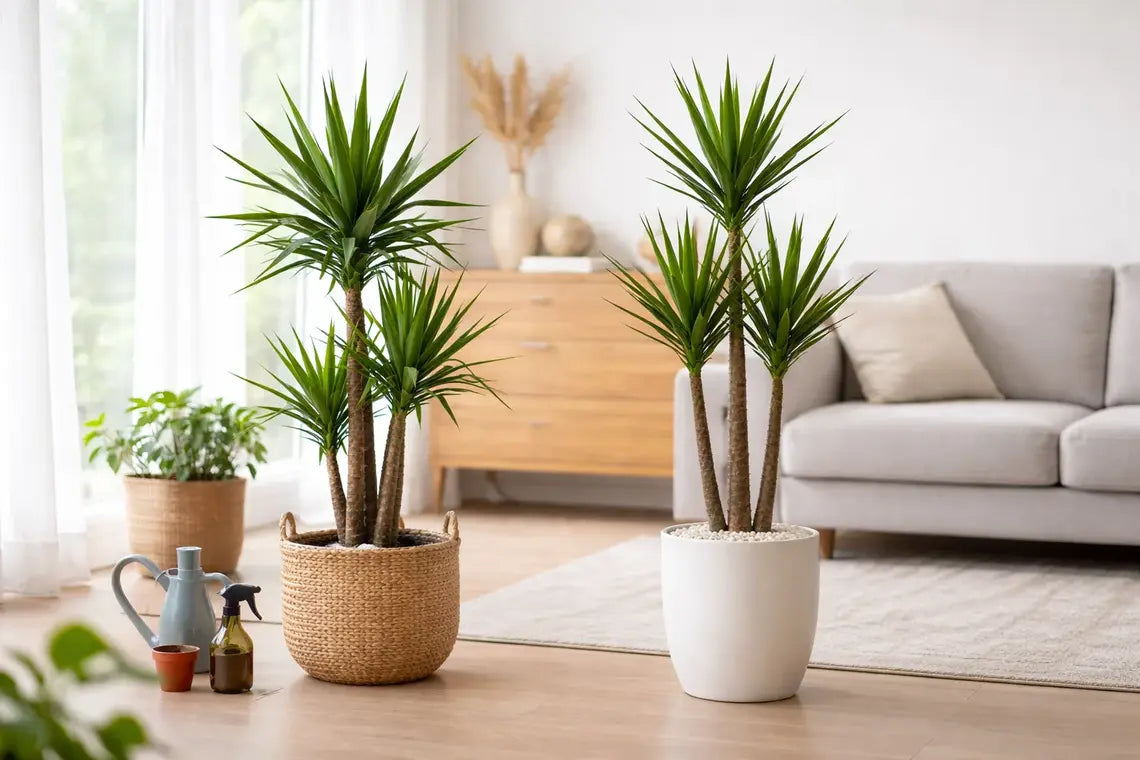
If you’ve had it up to here with droopy leaves, endless watering routines, or real plants that just won't thrive in your tricky lighting, it’s not the end of the road.
Yes, really.
Homeowners and business owners face the same dilemma: craving a lush yucca vibe without the upkeep. In this blog, we’ll show you how to tell whether real or fake yucca is the right choice for you, what you should consider, and how you need to care for each.
But first, we’ll start by understanding why yucca has become such a popular design choice.
Let’s get into it.
Why Is Yucca a Popular Choice?
The Yucca plant has a tall, striking shape - a popular feature among many homeowners.
It grows upright and adds instant style to any space, indoors or outdoors. Before the creation of artificial plants, many people used to choose real yucca for their spaces, and with good reason.
But recently, as faux versions become popular, especially in commercial spaces and modern homes, we’ve seen new debates sprouting - is there a better option, and what makes yucca so appealing in the first place?
From our experience working with faux yucca (but starting our business with real plants), we see a few shared benefits like:
- Strong, sculptural look that fits modern and classic interiors
- Works well as a statement piece or in minimalist designs
- Brings a sense of nature and calm into a space
- Pairs beautifully with wood, concrete, stone, and neutral palettes
- Suitable for both homes and commercial properties
The difference lies not in appearance alone, but in everyday experience.
Below, we’ll see why.
What to Expect From Real Yucca
 Owning a real yucca tree can be rewarding, but it comes with clear responsibilities you’ll have to undertake if you want healthy growth and development.
Here’s what the day-to-day reality looks like with a living yucca plant.
Light needs
Real yucca thrives in bright, indirect light and can tolerate some direct sunlight. This means you’ll need to have a good location in mind before buying your yucca so that it thrives.
Low-light environments will slow its growth and may cause leggy or weak stems. So, we don’t recommend buying a yucca and moving it around at home before you find a good spot for it, as it may die (out of revolt, probably).
Watering needs
Yucca prefers infrequent watering, so helicopter care is unnecessary for it. In fact, overwatering is one of the most common mistakes and can lead to root rot.
To ensure your yucca plant is ready for water, check the soil to see if it’s dry. If it’s even a little moist, wait another day or two. Still, you’ll have to keep a mental note about the last time you watered it so that you don’t neglect it entirely.
Growth patterns
Yucca grows slowly but steadily.
Indoors, it may reach impressive heights over time, especially when conditions are optimal and you take good care of it (following this list).
After a while, your yucca will outgrow its pot, so you’ll need to repot it and maybe move it to another location that can accommodate its growth.
Maintenance tasks
As with any living plant, the yucca needs maintenance. While not excessive, there are a few things you need to do for your yucca to keep it in good shape:
- Regular dusting of leaves
- Occasional repotting
- Monitoring soil drainage
- Removing dry or damaged leaves
Common issues
And since it’s not all sunshine and rainbows with plant care, here are a few things you need to look out for:
- Browning tips due to low humidity or inconsistent watering
- Pests like spider mites or scale
- Yellowing leaves from overwatering
Real yucca does not adapt well to long periods of neglect or irregular care. Missed watering schedules or sudden environmental changes often show quickly in their appearance.
If your job requires frequent travel, you’ll need to ask someone to look after your yucca while you’re away, especially if you don’t want to come home to just half its leaves hanging on.
What to Expect From Artificial Yucca

On the other hand, living with an artificial yucca plant gives you a unique experience, one that’s all about predictability and low effort.
Since these products are made from high-quality plastics, their care is not nearly as comprehensive as is for real yucca.
Here’s what you need to know before getting an artificial yucca:
Light needs
None. Artificial yucca looks identical in bright rooms, dark corners, or windowless spaces, and you can place your pot wherever you like without any repercussions.
Still, since the point of a realistic artificial yucca is to mimic the real plant, we recommend placing it in realistic locations that can still trick the eye. Check out our decor guide for yucca for some expert tips we tell our clients.
Visual consistency
Your yucca artificial plant will look the same every day, all year round, without seasonal changes, leaf drop, or discolouration.
You won’t need to account for any environmental effects impacting your yucca - it’s as strong as they come.
Maintenance tasks
Your artificial yucca is very low-maintenance. Just like most of our other faux plants, the fake yucca will only need the occasional dusting or gentle cleaning.
Besides this, if your yucca is outside and you want it protected from the sun, we advise using a UV-spray once every few months to ensure strong protection.
Differences in quality
Not all artificial plants are the same, and understanding what separates premium models from low-quality replicas is essential when choosing a yucca artificial plant.
Here are a few things your faux yucca must have to survive the trials of everyday life:
- Realistic leaf texture
- UV protection
- SafeTex-certified materials
- Reinforced internal structures
Freedom of placement
You can place artificial yucca anywhere, just like we said previously. Since you don’t need to worry about its environment, you can place your yucca in :
- Dark hallways
- Bathrooms
- Offices
- High shelves
- Commercial spaces
For outdoor designs, artificial outdoor yucca plants are specially treated to withstand sun exposure, rain, and temperature changes, making them ideal for terraces, balconies, and commercial exteriors.
If you’re planning to decorate your outdoor space with faux yucca, make sure it’s UV-resistant or at least shielded from the sun so that it doesn’t fade.
Factors to Consider When Choosing Between Real and Artificial Yucca
Now that you know the ins and outs of caring for real and artificial yucca, here’s what you should consider before choosing your fighter:
| Factor | Real Yucca | Artificial Yucca |
| Time and routine | Needs regular care and monitoring | Requires minimal time and attention |
| Travel frequency | Can suffer if left unattended | Perfect for frequent travellers |
| Interior light conditions | Needs bright, indirect light | Works in any lighting |
| Pets, children, and safety | Mild toxicity, leaf tips can be sharp | SafeTex-certified models are non-toxic and safe |
| Residential vs commercial use | Better suited for attentive home care | Ideal for offices, hotels, retail, clinics, and homes |
Be realistic with your lifestyle. Even if you really want a real yucca, make sure you can handle a real yucca.
If you can’t, choosing artificial isn't "cheating nature." It's about matching design with your real-life needs, and this is something you need to do yourself.
Finishing Thoughts
Choosing between real vs artificial yucca depends on the time and care you want to give your plants.
In the end, there is no universal right choice, but there is a right choice for you.
In any case, both options fit different needs, so your decision should depend on your lifestyle, space, and design goals.
Not your friend’s advice. Not your neighbour’s yard. Not a blog’s opinion. And if you’ve decided on a hassle-free, visually consistent artificial yucca, check out our yucca collection and book a free consultation with our design team (or come down to our showroom) to get in-depth, bespoke advice for decorating your space.