
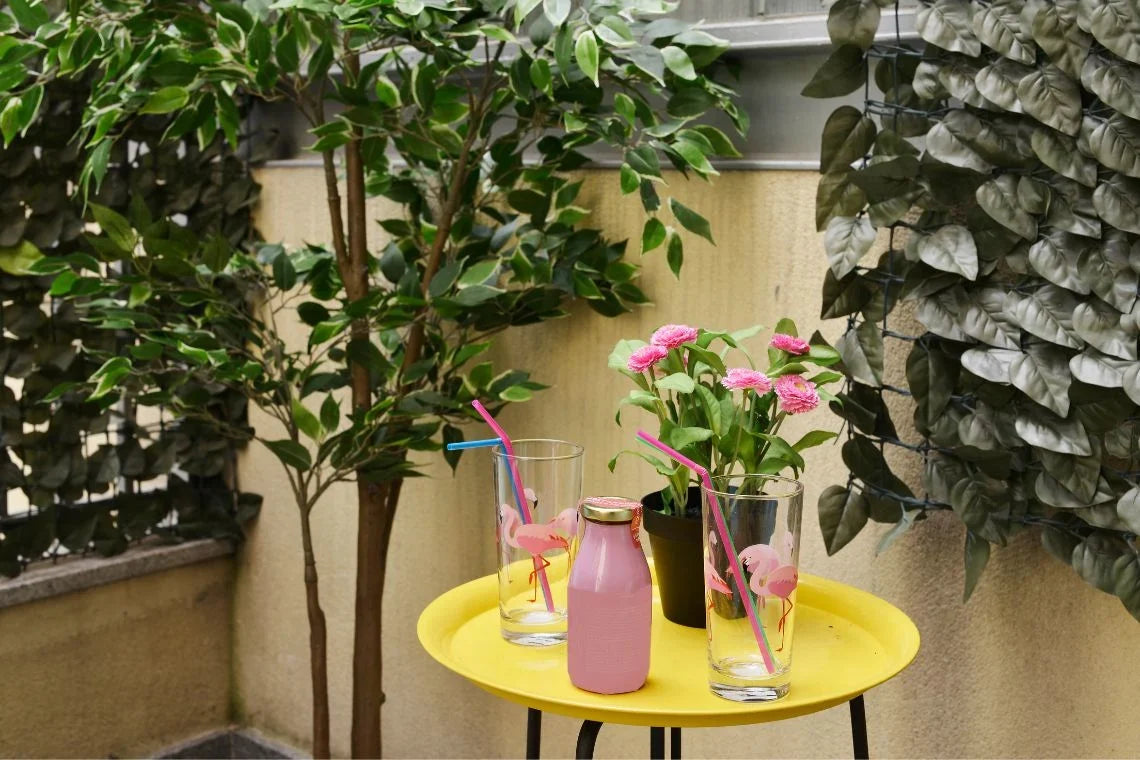
There's a particular moment in late August when the light shifts and the air changes, and the space you've been sitting in all winter starts to feel like it belongs to a different season.
Everything that felt warm and cosy in June now looks heavy and doesn’t make sense with the sun shining bright.
The instinct is to redecorate. But most of the time, you don't need to.
If you have artificial greenery in your space, you already have the most adaptable foundation in the room. It didn't yellow through winter, didn't drop a single leaf, and it won't need to be swapped out for spring.

What it does need is a few changes around it: lighter accessories, fresh stems, brighter lighting, a new pot here and there.
It all sounds grander than it is, so here's exactly how we approach that transition with as tight a budget as possible.
6 Ways to Transition Your Space Into Spring With Faux Plants
The permanence of artificial greenery is its defining quality, because the same characteristic that makes it low-maintenance is what makes it the right foundation for seasonal styling.
Think of your artificial greenery as the bones of the space. In winter, you dressed those bones in warm, dark, heavy elements. In spring, you strip some of that back and replace it with lighter, fresher details. The bones don't change, but you can do wonders with the outfits.
None of the six moves below require you to replace or remove any existing greenery. Some require a small additional purchase, but most require only a rearrangement or a styling swap. The cost is minimal, but the impact definitely isn’t.
Here’s what we suggest doing to your faux plants to transition from winter to spring:
Add artificial flowers
This is the first thing we recommend, and for just one reason: nothing signals the season more immediately than flowering stems.

Browse our artificial flower and stems range for spring-appropriate choices that you can get for as low as $7.95.
Thread a few stemsinto an existing faux green wall panel by pulling sections of the foliage forward and pressing the stem in so it sits naturally. For potted plants, a single flowering stem in the same pot as your existing artificial tree or shrub changes the character of the whole arrangement. Here’s how our operations manager Connie does that in under a minute.
Use seasonal fillers in your pots
The base of a potted artificial plant is one of the most underused styling tools available, and one of the easiest to swap seasonally. We cover the full approach in our guide to potting artificial plants.
For winter, most people tend toward bark mulch, dark soil-effect fillers, or textured brown substrates. For spring, the swap is simple: white or pale grey pebbles, fine sand, or a layer of preserved moss in a bright lime-green or sage tone.

The pot, the plant, and the position all stay the same, you just change the filler with material you can find outside in your garden.
Update your planters
Pot choice communicates season as directly as any other single styling decision. If you do want to buy something new, opt for a pot or planter.
Our pot range includes pale neutral tones that work specifically well for spring styling. They're lightweight, made from recycled materials, and designed to coordinate across multiple sizes, so a cluster of different-height pots in the same palette looks like an arrangement and not a random choice.
If you're styling a balcony for spring, our balcony styling set pairs UV-resistant plants and pots designed for this purpose, so start there.
Get UV-resistant plants for outdoor styling
Spring means moving outdoors again, and that means any artificial plant that's going to spend time in direct or indirect sun from September onwards needs to be UV-rated for Australian conditions.
Our UV-protected range was made with balconies, patios, and outdoor walls in mind. So, if you’re in a hot, windy location or dealing with low light, our artificial greenery thrives and always looks its best.

The UV inhibitors in these products are bonded within the leaf material during manufacturing. They’re not sprayed on the surface, which means they don't degrade with the first weeks of bright sun.
If you have indoor-grade artificial plants that you're thinking of moving outside for spring, don't, as they’re suitable for indoor conditions only.
Browse our UV-resistant outdoor artificial plants range instead, because everything here is rated for permanent outdoor use in Australian sun, with a 5-year UV warranty on applicable products.
Use spring-inspired accessories
Accessories are where seasonal character lives, and spring has a clear material language: lighter textiles, natural textures, pale ceramics, linen, rattan, and whitewashed or raw timber. These elements can (and should) sit beside and around your existing greenery.
A showroom highlight from our team goes further:
“Once we select the panels, we customise the look by incorporating lavender purple stems placed randomly across the panels to avoid repetition, or grouped in threes for a pop of colour.”
That same logic applies to a spring refresh: pick one accent colour (soft yellow, pale pink, fresh white) and introduce it consistently across stems, a vase, and one or two accessories.
Consistency is what makes a seasonal refresh look intentional.
Include lighting after dark
The quality of natural light changes between winter and spring, and the interior becomes brighter and more open without anything changing. Artificial lighting should respond to that shift.
In winter, most people gravitate toward warm, amber-toned lighting that creates enclosed warmth. For spring, the move is toward a slightly cooler warm-white (still 2700K–3000K, but perhaps brighter or more diffuse) that complements the fresh, open quality of the season.

String lights are the simplest spring lighting update for a balcony or alfresco space because they’re lightweight, inexpensive, and transformative for evening outdoor use as the nights get warmer.
Woven through an existing hanging garland or draped alongside a panel-covered railing, they brighten up (pun intended!) a spring evening on the balcony.
“Warm white lighting complements green tones better than cool white, which can make artificial plants look obviously fake”.
Considerations for a Spring Transition With Faux Plants
Thanks to our 20+ years of experience in the artificial plant industry, we’ve got a lot of got tips under our belts for decorating your space, and especially for transitioning into a season.
Start your styling with some of our advice above, but keep in mind a few considerations to make the space shine:
-
Edit before you buy. Walk through your space and remove the winter elements first. Pack up the dark throw cushions, heavy candle holders, deep-toned vases. In many cases, the space will seem much lighter and fresher without anything added. Only then assess what spring elements you might need.
-
Commit to one spring palette. Mixing warm amber tones, pale linen, and bright tropical colours in the same space produces a style that looks confused. Pick one spring direction (fresh and white, flowery, warm and natural) and let every accessory support that mood.
-
Don't over-accessorise. The space that looks most spring-ready is almost always the one that has had things removed, not added. Fewer, better-chosen seasonal elements always outperform a crowded collection of seasonal gestures.
-
Confirm outdoor ratings before moving plants outside. Australian spring UV is already significant, especially from September onwards. Any artificial plant moving to a balcony, courtyard, or outdoor space needs to carry UV certification. Our UV-resistant range is the right reference point for this.
-
Visit the showroom. The fastest way to get a personalised spring refresh plan is to come in with your phone, show us a few photos of your space, and spend 20 minutes with our team. Plus, you can look at all the products first-hand before you settle on anything.
FAQs
-
Do I need to buy new artificial plants every season?
-
No. The artificial greenery itself can stay as it is; it doesn't change between seasons and doesn't need to be replaced. But, to refresh your space, you can style around your faux plants using stems, pot fillers, accessories, textures, and lighting.
-
What's the easiest spring update for an existing artificial green wall?
-
Adding artificial flower stems directly into the panel foliage is the fastest and lowest-cost change. White flowering branches, pale stems, or soft pink blooms threaded into an existing green wall immediately shift the seasonal mood.
-
Can I move my indoor artificial plants outside for spring?
-
You can move your indoor artificial plants outside only if they’re UV-resistant. Indoor-grade artificial plants may fade quicker in spring and summer sun. Our UV-resistant outdoor range is built for outdoor use in Australian conditions, with UV inhibitors bonded within the leaf to protect the plant from harmful rays.
-
What pot colours work best for spring?
-
Pale neutrals like white, light sand, and soft grey read most naturally as spring against existing artificial greenery. Our Modern Designer Pot range includes several pale-toned options that work particularly well for spring styling.
-
How do I add spring colour to an existing artificial green wall without replacing the panels?
-
Thread flowering stems into the panel foliage, introduce pale-toned accessories around the wall, and update the base filler in any adjacent potted plants to a lighter material. Our guide to creating a custom green wall covers how to add stems and seasonal accents to an existing installation.
Finishing Thoughts
The winter-to-spring transition in your home doesn't need to be expensive, and it doesn't need to be dramatic.
A few stems, a lighter pot, a swap of accessories, a change in lighting are all moves that shift a space from one season to the next while everything that matters stays as it is.
Your artificial greenery was always the right foundation for this, but it just needs a few good decisions made around it. And those decisions are the kind of conversation we have every day with our clients, so make sure you reach out to our team for a consultation or visit our showroom so we can meet you in person.