
UV resistance is not a decorative label. It determines how long an artificial plant can exist in light without losing its credibility. When a faux plant fades unevenly, stiffens at the edges, or develops a dusty surface, the issue is not age but exposure. Sunlight quietly tests materials every day, and only some are built to survive it.
Most artificial plants look identical at purchase. Colour saturation is high, leaves feel flexible, and shapes appear convincing. The separation happens later. One plant continues to look composed years on, while another starts signalling decay within months. That difference sits inside the material itself, not on the surface.
The Chemistry Behind the Fade
Ultraviolet radiation attacks plastics from the inside out. In non UV resistant artificial plants, pigments and polymers are left exposed. UV light disrupts their internal structure, breaking bonds that give colour depth and material elasticity. This is why fading rarely looks even. Greens bleach toward yellow, darker veins disappear first, and leaf tips harden before the centre fails.

UV resistant artificial plants are produced differently. Stabilising agents are blended directly into the base material during manufacturing, not applied later as a coating. These agents absorb and disperse UV radiation before it damages pigment or structure. This is why products like the Large Green Leaf Buxus Faulkner Topiary Ball UV Resistant Artificial Plant 48cm retain tonal depth and surface integrity long after ordinary fake plants begin to deteriorate:
- Pigments remain locked within the material instead of breaking apart
- Leaf surfaces keep their original texture rather than turning powdery
- Flexibility stays consistent, preventing stress cracks at bends
This internal protection explains why two visually similar artificial plants age in completely different ways.
How UV Resistance Influences Colour Accuracy Over Time
Colour loss is not just about fading. It is about distortion. When fake plants degrade under UV exposure, they rarely fade evenly. Certain pigments fail faster than others, which is why greens drift toward blue, yellow, or grey instead of simply becoming lighter. This shift is what makes old artificial plants look artificial even from a distance.

UV resistant artificial plants behave differently because colour stability is planned, not accidental. During manufacturing, pigments are chosen and balanced based on how they respond to prolonged light exposure. This means the plant is designed to age predictably rather than degrade randomly.
Non UV resistant artificial plants often fail in stages. Darker veins disappear first, mid tones flatten next, and highlights become chalky. Once this happens, no amount of cleaning or repositioning restores the original look:
- Colour remains proportionally balanced across leaf surfaces
- Mid tones and highlights age at the same pace
- Visual contrast stays intact instead of collapsing
This matters especially in styled environments where artificial plants interact with stone, timber, fabric, or paint. A slight colour drift can clash with surrounding finishes and undo an otherwise refined space.
The table below illustrates how colour behaviour differs over time:
| Exposure Duration | Non UV Resistant Plants | UV Resistant Plants |
| 6 months | Early pigment shift, uneven tone | No visible change |
| 1 year | Noticeable fading, loss of contrast | Colour remains balanced |
| 3 years | Blue or grey cast, brittle texture | Minor softening with stable hue |
| 5 years | Visibly artificial appearance | Still visually credible |
This colour accuracy is why UV resistant artificial plants perform better in commercial interiors, hospitality settings, and high visibility residential spaces. They do not just survive light. They maintain visual alignment with the space around them.
Choosing UV resistance is ultimately choosing predictability. Instead of wondering how a plant will look next summer, you know exactly how it will age.
Why Indoor Plants Need UV Protection Too
Indoor placement does not mean light immunity. Glass blocks most UVB but allows a steady stream of UVA, which accumulates damage over time. A plant near a window, skylight, or bright atrium experiences constant exposure even without direct sun.

Non resistant fake plants lose contrast gradually indoors. Greens flatten, shadow variation disappears, and leaves start to look printed rather than dimensional. UV resistant artificial plants like the Artificial Fern Lady Fern 40cm UV Resistant Artificial Plant hold colour separation and form, even when light conditions change daily:
- UVA passes through standard window glass
- Indoor fading happens slowly but permanently
- Shape distortion often follows colour loss
Indoor UV resistance is about preserving consistency, not preparing for extremes.
The Cost of Replacing Cheap Greenery
Low cost fake plants appear economical only at checkout. Their lifespan shortens dramatically in light exposed environments, creating a replacement cycle that quietly compounds. Each swap adds cost, time, and visual disruption.

A UV resistant artificial plant like the Dense Hanging Fern 90cm maintains its structure year after year. Stems keep their natural fall, fronds retain tonal variation, and volume stays intact. One purchase replaces multiple failed artificial plants:
- Repeated replacement often costs more than a single high grade plant
- Visual inconsistency weakens styled spaces over time
- Frequent disposal increases material waste
Longevity changes the equation entirely.
How to Spot the Fakes: The Bad Kind
Not every product labelled UV resistant artificial plants actually is. Some rely on surface treatments that erode quickly, leaving the core material unprotected. Spotting weak construction requires attention to detail:
- Slick or oily coatings tend to degrade fast
- Excessive shine often signals untreated plastic
- Strong chemical odours suggest unstable compounds
- No colour retention warranty is a warning sign

The Artificial Topiary Shrub Hedyotis UV Resistant Artificial Plant 50CM holds colour because each leaf is produced from stabilised material. Protection is permanent, not cosmetic.
The Aesthetic Integrity of Your Space
Artificial greenery plays a structural role in visual composition. When fake plants fade unevenly, they draw attention for the wrong reasons. Colour imbalance disrupts arrangements, weakens contrast, and exposes artificiality.
The White Flowering Jasmine Stem UV Resistant Artificial Plant 30cm keeps leaves crisp and petal tone stable even in bright interiors. This stability preserves the arrangement hierarchy and prevents visual drift over time:
- Colour accuracy remains consistent across seasons
- Depth and layering stay believable
- Focal points remain intentional
Visual reliability keeps artificial greenery convincing.
Breaking the Boundaries of Where Faux Can Go
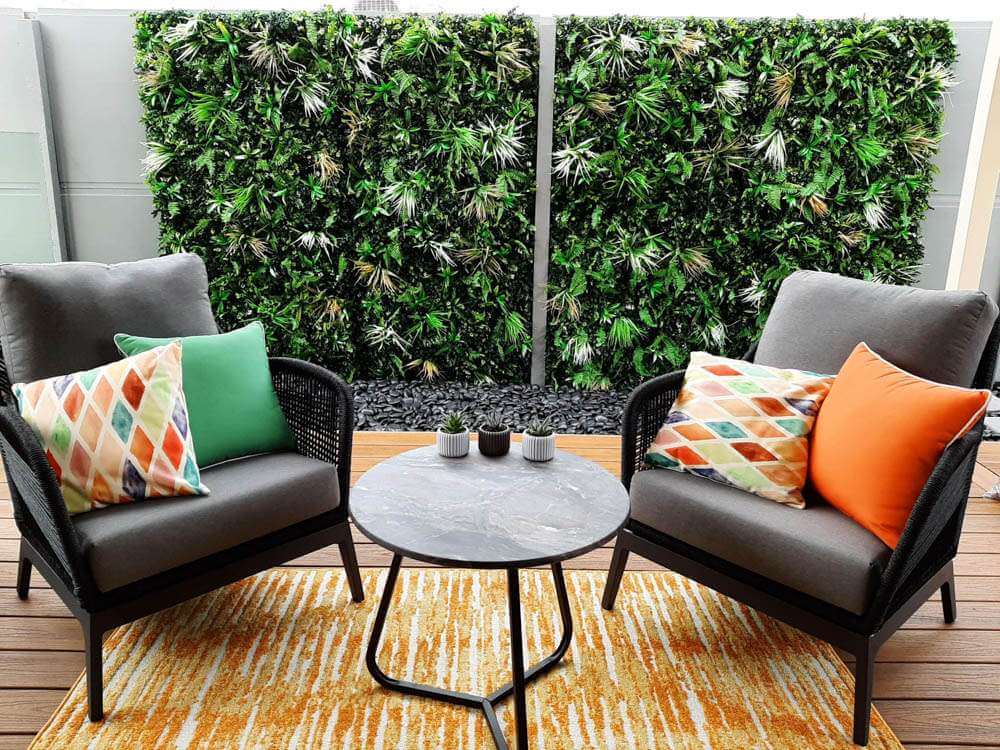
UV resistant artificial plants allow placement in spaces that destroy ordinary fake plants. Rooftops, pool surrounds, and west facing balconies expose decor to prolonged light and heat.
The Long Artificial Lavender Stem White 50cm UV Resistant Artificial Plant maintains brightness and flexibility even under direct sunlight. Its form stays relaxed rather than rigid, allowing placement in exposed locations without compromise:
- High exposure zones retain freshness
- Placement options expand significantly
- Structural stability supports long term use
These locations are inaccessible to non protected materials.
The Environmental Conversation
Longevity reshapes the environmental impact of artificial plants. Short lifespan fake plants generate unnecessary waste, while long lasting plants reduce replacement cycles entirely.
UV resistant artificial plants remain in use for years without water, fertilisers, or chemical treatments. Their extended lifespan lowers material turnover and reduces manufacturing demand:
- Fewer replacements mean less waste
- No ongoing resource consumption
- Stable appearance reduces disposal
Small decisions scale when repeated across homes and commercial spaces.
Final Word
Ignoring UV resistance leads to predictable disappointment. Fading, cracking, and surface breakdown are not random failures but outcomes of material choice.
Designer Plants offers UV resistant artificial plants engineered to retain colour, form, and credibility across indoor and outdoor environments. Choosing the right artificial plants is not just about decoration. It is a commitment to consistency that lasts.