
It is indeed a dynamic shift in Melbourne’s interior style that is turning conventional design wisdom upside down. In a city obsessed with reinvention, you’ll notice a wave rippling across its interiors, a silent movement energising lobbies, lofts, and laneway cafes with artificial plants that stay pristine in ways nature simply can’t match. The ordinary is evaporating, replaced by spaces that feel intentional, bold, and meticulously thought out. Glance around and you’ll pick up on it: an unmistakable edge, a curated calm, where every leaf is a calculated move and each arrangement tells a story without words.
This isn’t décor for decoration’s sake. Melburnians are quietly rewriting the playbook, pushing past tired rules and upending the basic equation of plant plus pot. Across Melbourne, fake plants have become a clever design choice and a way to signal ambition and creativity, a way to control the mood of a space with almost surgical precision.
Pay attention. The aesthetics at play are impressive and hint at something deeper, a coded logic running through our most magnetic spaces. If you sense there’s a secret the city’s designers aren’t saying out loud, you’re not wrong. What’s about to unfold next will make you question everything you thought you knew about what greenery can do.
How An Artificial Plant in Melbourne Became Strategic?

In Melbourne, interiors are judged on their ability to surprise, comfort, and perform beyond obvious trends. “Low maintenance” has never been enough. The surge in a fake plant sourced for Melbourne interiors is about usefulness, yes, but the deeper story? It is about reclaiming power over indoor environments, turning plants from a risk into an asset.

A Tall Artificial Fiddle Leaf Fig 170cm is no longer a placeholder. It becomes a tool for spatial zoning, breaking up cavernous lofts into functional pods, or guiding the eye through gallery spaces. Genuine foliage droops, wilts, or rebels in poor light; an artificial plant positioned in Melbourne spaces does none of this. It helps spatial flow, reduces echo, and visually connects different areas.
Decisions are not being driven by laziness. What we’re witnessing is Melbourne’s enthusiastic embrace of adaptability:
- Moving greenery to wherever the mood or function requires, instantly
- Repurposing plants for pop-up events or seasonal retail displays
- Redefining “feature corners” with assertive scale, think statement palms for entrances or offices
People here are manipulating the design narrative of their own spaces.
A New Perspective on Light, Growth and Design with Artificial Plants
Traditional greenery sees light as a necessity. Melbourne’s apartments, with heritage layouts or modern towers, often have shadowed zones that kill any hope of lushness. This is old news. The new approach is about leveraging freedom.

The Split Philodendron Monstera Deliciosa (Split Leaf) 120cm does something living plants cannot: it breaks boundaries between “public” and “private” spaces, flourishing in windowless bathrooms or shadowy reading nooks. Designers are dissecting rooms, zoning with green shapes that call attention to architectural drama, not just sunlight.
Artificial Plants integrated into Melbourne interiors are unlocking creativity:
- Windowless office pods springing to life with dense foliage
- Transitional entryways becoming multi-layer stories with vertical gardens
- Deep alcoves, once empty, now boasting greenery as visual ‘bookends’
Greenery becomes a tool of illumination, not just an accessory.
Vertical Greenery and the Spatial Revolution
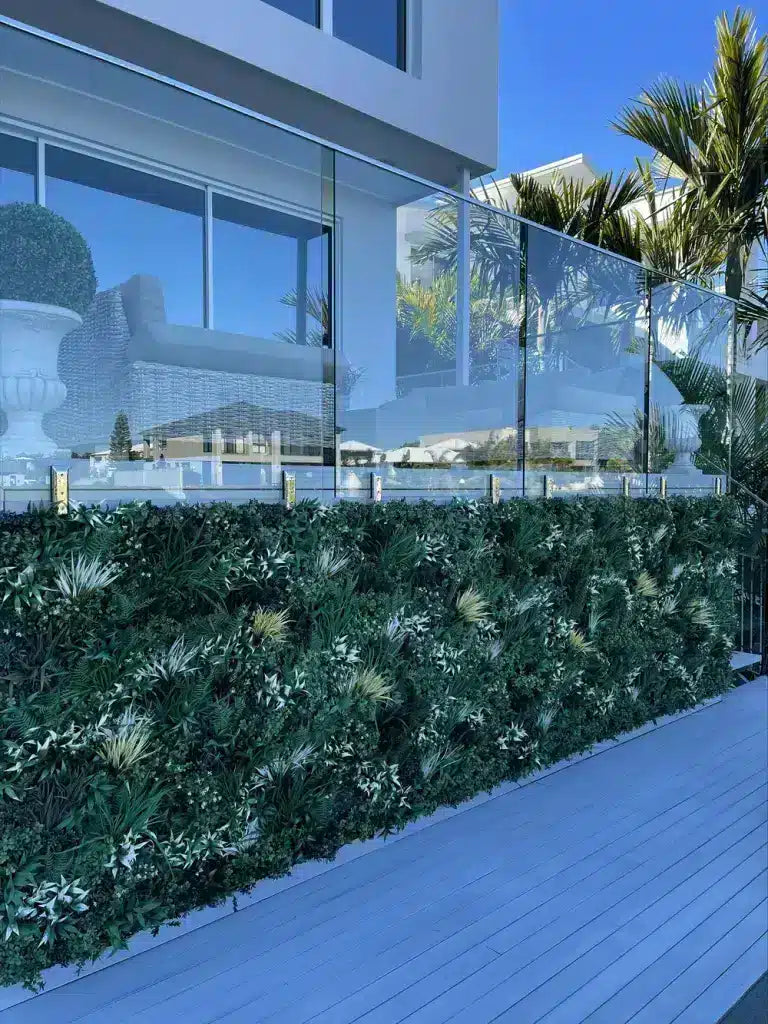
Floor space keeps shrinking. Walls are now the arena for design innovation. Melbournians are investing in vertical green panels for a tactical upgrade. The Luxury Green Tropics Vertical Garden Green Wall UV Resistant 1m x 1m brings a sense of theatre and solves several pain points instantly.

What these installations accomplish:
- Securing visual privacy in dense urban apartment blocks
- Muting sound in open-plan offices and meeting rooms
- Establishing brand identity or domestic personality through consistent greenery
Clients in hospitality have noticed that Instagram feeds no longer show empty walls; they showcase dense, tactile foliage as a signal. Vertical installations set expectations from the first step inside.
The Real Economics Behind the New Green
Common sense tells us plants are an affordable luxury, until factoring in the cycle of replacement, equipment, lost weekends, and endless trips to the nursery. Melburnians are recalculating value, and the numbers are eye-opening.

A Premium Artificial Areca Palm Tree Real Touch 160cm sidesteps the usual traps:
- No special soil, no ongoing compost waste
- No pest control purchases, no emergency replacements after holiday absences
- Elimination of water marks, root rot, and other plant casualties on high-end finishes
This is about recouping lifestyle. The economic reasoning is bold and simple: why subscribe to constant cost and disappointment when you can establish permanent green assets that perform year-round?
Air Fresh? Yes. Air Triggers? Never Again.
Most call it “air purification”, but let’s get honest about the flip side. Real potting mix harbours spores, houseplants invite pests, and spring pollen blinds half the neighbourhood. For allergy warriors and clean freaks, a fake plant carefully chosen for Melbourne interiors opens the door to real comfort.
Why are designers swapping out real for replica? Because:
- Workspaces freed from the endless loop of sneezing fits
- Pet lovers relax, knowing no claws or muzzles will trigger a pet emergency
- Families find it’s the only way to get green without the daily dose of antihistamines
Plant health does not need to fight human health.
No more “trade-off” between atmosphere and air, artificial plants create an environment where people breathe easier and spaces feel sharper.
The Role of Plants in How Spaces Are Used
Strategic greenery is being leveraged for its psychological effects. The way certain faux plants direct attention, create privacy or encourage collaboration. For example, the Medium Mixed Boxwood Topiary Ball UV Resistant 28cm can segment a co-working lounge or bracket entrances, acting as silent gatekeepers.

Designers now advise that clients treat foliage as part of the plan, not an afterthought. This is about:
- Guiding movement through public and private areas
- Highlighting high-traffic pathways with greenery and structure
- Softening sharp corners and break zones in hard-finished interiors
Every placement is a message. The move is from “filling the pot” to “building the environment”.
The Commercial Blueprint Gets Personal with Fake Plants
What’s been tested for years in retail, hotels, and A-grade offices is now standard for the home. Businesses value consistency, durability and visual impact, and the capacity for instant adaptation. Brand activations are not held up by nursery schedules or grow lights.
Melbourne’s home buyers and renters have caught on. Why settle for seasonal swoons:
- Dress a penthouse terrace for events with vertical hedge screens
- Restyle the living room multiple times for photo shoots or guests
- Use fake plants as spatial dividers or privacy anchors
Homes look continuously “staged”, a sharp asset when selling, hosting, or showcasing on social media.
Exploring Pet Safety and Plant Compatibility
This topic is far from basic. Pets and plants are historically incompatible, especially as many popular live plants are toxic to animals, while bored pets make short work of anything edible.
The new green playbook is rewriting this thorny issue. Artificial plants allow full design freedom without risk:
- No more trips to the vet for chewing on lilies or monsteras
- No disturbed root balls or toppled pots after high-velocity pet zoomies
- No more policing the “off limits” list for kids or pets at family gatherings
The entire premise of restricted zones in a house is erased, now every member enjoys the surroundings.
Redefining Sustainability on Local Terms with Fake Plants
The word “eco-friendly” is overused. Here, what matters are the details that count towards genuine resource-saving. The manufacturing life cycle of a fake plant made for Melbourne homes looks different when you opt for premium choices designed to last five, ten, even fifteen years.
Sustainability in context means:
- Water bills shrinking, especially during drought restrictions
- Fewer chemicals from sprays, fertilisers and cleaners leaching into shared waterways
- A break from “single-use” culture via long-living décor choices
Longevity and quality are now measurable; no one is buying for a single season.
The Emotional Layer No One Talks About
The core of this revolution: Melbourne now values spaces that sustain human energy, not eat into it. A home full of needy plants multiplies the mental checklist: water, prune, rotate, worry. The psychological reward of artificial plants is different; it soothes because it does not ask for anything in return.
Consider what happens:
- Interiors look camera-ready, day or night, rain or shine
- Homeowners walk past green corners and feel a sense of completion, never guilt
- Time once spent on upkeep can go to creative pursuits, rest, or socialising
Melbourne is writing a new script, living better with less effort, and still achieving the aesthetic punch everyone wants.
Final Word
Melbourne’s future-forward designers, property owners and urban dwellers are making a declaration. Anything that saves time, looks extraordinary, and performs across the full calendar year is no longer optional. Artificial plants are now an instrument of design influence, and they’re here to stay, recalibrating what it means to craft a memorable Melbourne interior.