
Dealing with poison ivy can be a nightmare. That itchy rash and those red, blistered patches aren’t just annoying. They can seriously mess up your plans! So, if you’re asking yourself how to get rid of poison ivy, you’re in the right place.
Whether you’ve spotted it creeping through your garden or you’ve been unlucky enough to get a rash from exposure, there are plenty of ways to tackle this pesky plant. In this guide, we’ll walk you through everything you need to know about identifying, removing, and preventing poison ivy, so you can reclaim your yard and your peace of mind.
What is Poison Ivy & What does it Look Like?
Poison ivy is a sneaky plant that can cause a whole lot of trouble for anyone who brushes up against it. Its oily resin, called urushiol, is what triggers those itchy, blistering rashes. You’ll find poison ivy growing in a variety of environments, from wooded trails to suburban backyards. It’s a pro at blending in, which makes it tricky to spot if you’re not looking closely.

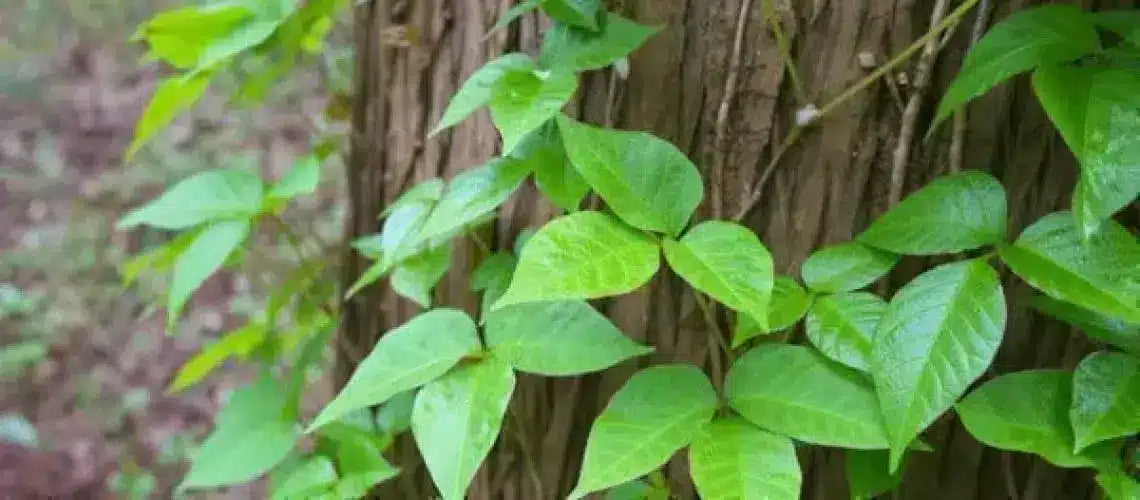
So, what does a poison ivy leaf look like? The key is the classic ‘leaves of three’ pattern: each set of leaves has three leaflets, with smooth, jagged, or notched edges. Depending on the season, the leaves can be green, reddish-orange, or even glossy.
How to Identify Poison Ivy
The problem with recognising poison ivy is that it exists in different forms. Sometimes it can be a bush while other times, it’s a vine and you might think it’s a harmless plant.
 But all types of poison ivy share a few collective features. Here are some features to look out for:
- Poison ivy mimics the tree they’re attached to. If a vine has fine hairs, chances are it’s poison ivy.
- The leaves of poison ivy might vary but they follow the rule of three. That means they always come in clusters of three.
- Poison ivy doesn’t have a thorny stem. If you find vines or bushes with thorns, it’s not poison ivy.
- Poison ivy usually comes with pale green, white, or cream-coloured berries. The berries are also quite hairy and transparent.
- When growing within the city, poison ivy is a climbing vine. But in wooded areas, it will be a ground creeper.
Once you know the signs, you’ll have a much easier time spotting (and avoiding) this pesky plant.
Precautions Before Removing Poison Ivy
Before you dive into removing poison ivy, prepare yourself. First, prepare yourself with the right protective clothing. Long sleeves, trousers, gloves, and boots are your best defence against urushiol. If possible, choose disposable gloves or something you can easily clean.
It’s also smart to mark the area where the poison ivy is growing so you don’t accidentally disturb it while working on other plants. If you’re planning to use tools, make sure they’re easy to clean afterwards. Finally, choose a calm, non-windy day for removal because wind can spread urushiol to you or nearby plants.
4 Expert Methods to Remove Poison Ivy
It’s time to figure out how to get rid of poison ivy in your garden. Here are some tips and methods to help you understand how to get rid of poison ivy plants permanently:
Manual Removal
 If you don’t mind getting your hands dirty (with gloves on, of course!), manual removal is a tried-and-true method. Carefully dig out the plant, making sure to get all the roots since even tiny pieces can grow back.
Toss the whole plant into a sealed plastic bag to keep the oils contained. And whatever you do, don’t burn poison ivy! The smoke can carry the toxic oil, which can be dangerous to inhale.
Using Chemical Treatments
 Sometimes, you just need a little help from modern science. Herbicides made specifically for poison ivy can make quick work of it. Spray the solution directly onto the leaves and stems, following the directions on the label (trust us, they’re there for a reason). You might need to reapply once or twice to fully get rid of it, but for big infestations, this is often the easiest way to take control.
Natural Remedies for Poison Ivy Removal
 If chemicals aren’t your thing, don’t worry. There are natural ways to handle poison ivy. A mix of vinegar, salt, and washing-up liquid can dry out the plant over time. Boiling water works, too—just pour it directly onto the roots. These methods may take a bit longer, but they’re safe for the environment and any other plants nearby. Plus, who doesn’t love a good DIY project?
Smothering Poison Ivy
 For bigger patches, smothering poison ivy is a no-stress option. Just cover the area with a tarp or some landscaping fabric and weigh it down with rocks or bricks. The lack of sunlight and air will eventually kill the plant. It’s a slow process, but it’s super easy and doesn’t require much effort once the cover is in place. Just check in every so often to make sure no sneaky vines are escaping.
Cleaning Up After Removal
Now that you’ve learned how to get rid of poison ivy plants, let’s talk about the post-removal cleanup. Here are some steps to help you along the way:
How to Clean Tools and Equipment
Once you’ve dealt with the poison ivy, don’t forget to clean your tools and gear. Wash everything with hot, soapy water to get rid of any lingering oils. For items you can’t wash, like secateurs, a quick wipe-down with methylated spirits should do the trick. And your clothes? Toss them in the wash separately with a strong detergent—better safe than sorry!
Tip: While you’re cleaning your tools and equipment, wear long gloves and ensure you have zero contact with the tools.

Monitoring for Regrowth
Poison ivy is stubborn, so keeping an eye on the area after removal is key. Check for any little sprouts popping up, especially during the growing season, and pull them out right away. Again, wear gloves whenever you’re pulling fresh poison ivy out. It doesn’t take much time, and a little vigilance goes a long way toward keeping your yard ivy-free.
Ground Maintenance Tips
Once you’ve cleared the area, it’s a good idea to keep it well-maintained to prevent poison ivy from making a comeback. Mulch can help suppress weeds, and planting ground covers like native ferns or wildflowers can crowd out any regrowth. Regular mowing and trimming nearby plants will also keep things in check.
Replacing Poison Ivy with New Plants
After all that hard work, why not spruce up the space with some safe, beautiful plants? Native flowers, artificial shrubs, or grasses are great options to fill the gap where poison ivy used to be. Not only do they look great, but they also make it harder for ivy to take root again. Plus, it’s a nice way to reclaim your garden and enjoy the results of your efforts.
What to Do If You Are Exposed to Poison Ivy
Are you in contact with poison ivy somehow? Here’s exactly what you need to do:
Immediate Actions
If you think you’ve come into contact with poison ivy, act fast! Wash the affected area with soap and water as soon as possible—within the first 15 minutes is ideal. Use cool water to help keep the oil from spreading. Avoid touching your face or other parts of your body until you’ve cleaned thoroughly.
Over-the-Counter Treatments
For mild rashes, you can rely on OTC remedies to soothe the itch and irritation. Calamine lotion, hydrocortisone cream, or antihistamine tablets can help ease the discomfort. These are widely available and great for managing common poison ivy symptoms.
Home Remedies
If you prefer natural remedies, oatmeal baths or cool compresses can work wonders for calming itchy skin. Aloe vera gel is another soothing option and diluted apple cider vinegar can help reduce inflammation.
When to Seek Medical Attention
Sometimes, home remedies aren’t enough. You should quickly seek medical attention if your poison ivy rash is:
- Severe,
- Covering a large portion of your body,
- On your face or genitals,
- Showing signs of pus, swelling, or fever.
Conclusion
Poison ivy doesn’t have to ruin your day or your yard. Once you know what a poison ivy leaf looks like, using safe removal methods, and knowing what to do if you’re exposed, you can tackle this pesky plant with confidence.
Whether you’re looking to clear up a rash or wondering how to get rid of poison ivy plants for good, the key is preparation and persistence. Take the time to follow these tips, and you’ll be enjoying an ivy-free yard in no time!