
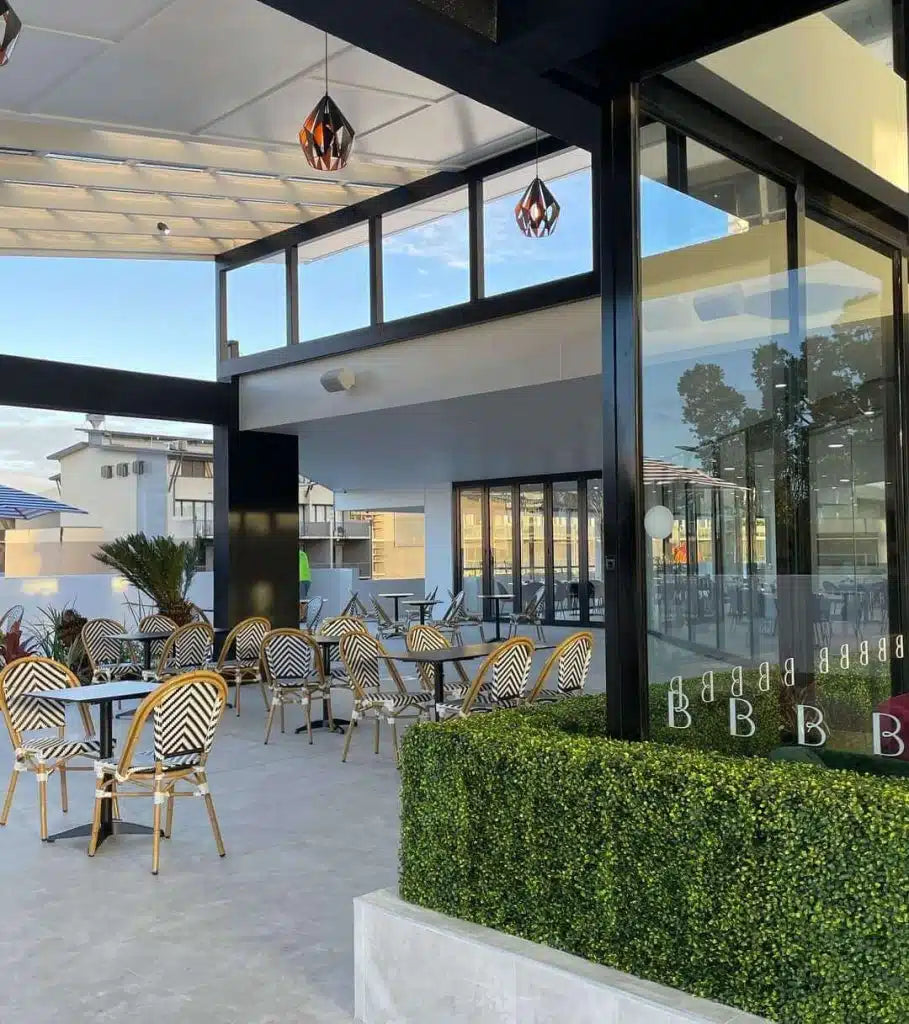
Privacy comes at a premium in today's housing developments. With properties built closer together and outdoor spaces increasingly exposed, finding seclusion outdoors has become challenging. Many homeowners experience the frustration of neighbours overlooking their patios or passersby peering into their gardens.
Artificial hedge walls offer a practical solution to this privacy dilemma. Modern fake hedges have evolved significantly from earlier versions. Contemporary artificial hedges deliver realistic appearance while solving privacy challenges without the wait time or maintenance requirements of living plants.
Natural hedges certainly have their appeal, but artificial hedge panels provide immediate privacy and minimal upkeep. This combination explains their increasing popularity across urban rooftops, commercial properties, and residential backyards.
What Are Artificial Hedge Walls?
At their core, artificial hedge walls consist of synthetic foliage attached to backing materials. Quality versions utilise polyethylene or polypropylene materials molded to replicate leaf shapes, textures, and colour variations found in natural plants. Manufacturers treat these materials with UV stabilisers to prevent sun damage and colour degradation.
Artificial hedges typically come in panel form—ranging from 20 x 20 inches to 1 x 1 meter—designed to connect together. This modular approach makes them adaptable to spaces of various dimensions, from small balconies to extensive property lines.
The quality spectrum spans considerably. Budget panels feature uniform patterns and obvious synthetic appearance up close. Premium options incorporate varying leaf sizes, multiple green shades, and three-dimensional construction creating visual depth. Higher-end products may include subtle stems and minor imperfections that paradoxically enhance realism.
Benefits of Artificial Hedge Walls
Installing artificial hedge walls solves numerous landscape challenges through several key advantages.
Immediate Results
Natural hedges require substantial growing time—typically three to five years—to reach functional privacy height and density. Artificial panels provide instant screening at whatever height required. This immediate solution proves particularly valuable for new properties or preparing spaces for upcoming events.
Minimal Maintenance Requirements
Traditional hedges demand regular attention. The maintenance elimination alone justifies artificial alternatives for many property owners:
- No watering schedule required
- No seasonal pruning needed
- No leaf cleanup necessary
- No disease management or pest control
- No plant replacement for failed sections
This maintenance reduction translates to significant time and cost savings over years of ownership.
Climate Independence
Artificial hedges perform identically regardless of weather conditions. This consistency proves valuable in regions with challenging growing conditions—excessive heat, prolonged cold, drought, or high winds. The screening effectiveness remains constant through all seasons, unlike living plants that may thin during dormant periods.
Installation Flexibility
Artificial hedge walls function successfully in locations where natural plants struggle or fail:
- Areas lacking soil depth or quality
- Spaces with extreme sun exposure or deep shade
- Concrete surfaces like balconies or rooftops
- Poolside areas where plant debris causes maintenance issues
- Indoor-outdoor transition zones
This adaptability makes artificial hedges uniquely suited for urban environments and challenging microclimates.
Types of Artificial Hedges
The market offers diverse artificial hedge options suited to different aesthetic preferences and functional requirements.
Boxwood Varieties
Boxwood-style panels dominate the market due to their versatility. Their small, densely packed leaves create uniform coverage that complements most architectural styles. Boxwood artificial hedges work particularly well for formal garden designs and structured outdoor spaces.
Price points vary substantially. Entry-level versions display obvious uniformity, while premium options incorporate multiple leaf tones and placement variations that mimic natural growth patterns.
Ivy and Climbing Plant Replicas
For less structured applications, artificial ivy and climbing plant panels offer relaxed alternatives. These designs typically feature larger leaves with natural draping characteristics. Ivy-style hedges excel at:
- Softening harsh structural elements
- Creating informal garden atmospheres
- Complementing traditional architectural styles
Many ivy panels include supplementary elements like small flowers or berries that add visual interest and realism.
Mixed Foliage Designs
The most sophisticated artificial hedges combine multiple plant types within single panels. These mixed designs incorporate:
- Various leaf shapes and dimensions
- Multiple green tones from light to dark
- Occasional accent elements like blossoms or fruits
- Textural variations suggesting different plant species
While commanding premium prices, these complex panels provide superior realism that withstands closer inspection.
Privacy Comparison
| Hedge Type | Privacy Level | Leaf Density | Visual Interest | Price Range |
| Basic Boxwood | High | Dense, uniform | Moderate | $$ |
| Premium Boxwood | High | Dense, varied | Moderate-High | $$$ |
| Ivy/Climbing | Medium-High | Medium, irregular | High | $$-$$$ |
| Mixed Foliage | High | Dense, varied | Very High | $$$-$$$$ |
| Flowering Options | Medium-High | Medium | Very High | $$$-$$$$ |
Choosing Quality Artificial Hedge Panels
Several factors determine the performance and longevity of artificial hedge installations. Understanding these elements helps avoid disappointment and premature replacement.
Quality Indicators
Material quality significantly impacts durability and appearance. When evaluating options, consider these quality markers:
Materials: High-density polyethylene (HDPE) provides superior durability and realism compared to polyvinyl chloride (PVC). HDPE maintains flexibility and colour stability in varying weather conditions.
UV Protection: Effective ultraviolet stabilisers prevent colour fading and material degradation. Quality manufacturers specify their UV protection standards and support products with multi-year warranties for outdoor applications.
Construction Methods: Examine leaf attachment systems carefully. Superior panels incorporate mechanical connections that physically secure leaves to backing materials rather than adhesives alone.
Fire Resistance: Safety standards vary among products. Panels with flame-retardant treatments offer important protection, particularly in dry climates or near cooking areas.
Warranty Coverage: Established manufacturers typically offer 3-5 year warranties, demonstrating confidence in their materials and construction methods.
Coverage Calculations
Accurate measurement prevents project delays and additional expenses:
- Measure total length and height requiring coverage
- Calculate square footage needed
- Check manufacturer specifications for panel coverage area
- Divide required area by panel coverage
- Add 5-10% additional material for adjustments and waste
Panel packaging typically lists coverage specifications, though calculation methods sometimes vary between manufacturers.
Density Considerations
Panel density—the quantity of foliage per square foot—significantly affects both privacy performance and cost:
- Light density panels cost less but show backing materials through visible gaps, suitable primarily for decorative rather than privacy applications.
- Medium density provides reasonable coverage at moderate prices, appropriate for general applications where strict privacy requirements don't apply.
- High density panels eliminate visible backing, maximising privacy and realism at premium price points.
For primary privacy screening, high-density panels generally deliver the most satisfactory results despite higher initial costs.
Installation Process
Most artificial hedge installations can be completed as DIY projects with basic tools and reasonable skills, though professionals may handle complex applications more efficiently.
Preparation Steps
Thorough preparation improves installation quality and long-term results:
- Clean mounting surfaces to remove debris and loose materials
- Repair any damage to existing structures that will support panels
- Assemble necessary tools and materials before beginning
- Create installation plans addressing corners, edges, and obstacles
- Consider access requirements for utilities or features requiring future maintenance
Creating simple diagrams marking panel positions and attachment points prevents confusion during installation.
Required Tools
Standard installations typically require:
- Measuring tape
- Level
- Drill with appropriate bits
- UV-resistant cable ties
- Heavy-duty scissors or utility knife
- Wire cutters
- Safety equipment (gloves, eye protection)
Specific mounting hardware depends on the backing surface: masonry anchors for brick or concrete, wood screws for timber structures, or specialised fasteners for metal fencing.
Installation Technique
For Wall or Fence Mounting:
- Mark starting positions ensuring level placement
- Secure initial panel at multiple attachment points
- Add subsequent panels, maintaining tight seams
- Install additional fasteners at stress points or areas with wind exposure
- Trim excess material at edges for clean appearance
- Complete any additional rows following the same procedure
For Freestanding Applications:
- Construct supporting framework using appropriate materials
- Ensure adequate foundation or anchoring against wind forces
- Attach panels using recommended fasteners
- Secure edges and corners with additional attachment points
- Trim panels to fit specific dimensions
Seamless Connection Methods
Achieving natural-looking results requires attention to panel transitions:
- Vary panel orientation occasionally to reduce pattern repetition
- Overlap edges slightly rather than precisely aligning panels
- Use trimmed materials to fill visible gaps
- Position fasteners to pull panels snugly together
- Adjust foliage manually after installation to blend seam areas
These techniques minimise the grid-like appearance that often betrays artificial installations.
Applications Beyond Basic Privacy
Artificial hedge walls serve numerous functions beyond simple privacy screening. Creative applications demonstrate their versatility across residential and commercial settings.
Privacy Enhancement Solutions
The primary application remains creating private areas in exposed locations:
- Patio Enclosures: Defining intimate outdoor living spaces
- Pool Privacy: Creating visual barriers around swimming areas
- Property Boundaries: Establishing borders without encroaching into neighbour space
- Outdoor Shower Surrounds: Forming private bathing enclosures
These applications benefit from the consistent coverage and immediate privacy artificial hedges provide.
Visual Improvement Applications
Artificial hedges excel at concealing unattractive elements:
- Utility Screening: Hiding equipment, meters, or service areas
- Masking Unappealing Views: Blocking industrial equipment or commercial structures
- Infrastructure Concealment: Covering chain-link fencing or concrete barriers
- Creating Backdrop Areas: Establishing photogenic settings for events
The ability to install these panels where living plants couldn't survive makes them particularly valuable for challenging urban environments.
Space Definition
Artificial hedges create effective visual divisions between functional areas:
- Garden Room Dividers: Separating different outdoor living spaces
- Commercial Area Partitions: Creating distinct zones in restaurants or hotels
- Event Space Organisation: Forming temporary divisions for gatherings
- Balcony Privacy Screens: Establishing separation between adjacent units
Movable installations allow reconfiguration as spatial needs change over time.
Maintenance Requirements
While artificial hedges eliminate most plant care, periodic maintenance extends their appearance and functional lifespan.
Regular Cleaning
Environmental exposure necessitates occasional cleaning:
- Dust Removal: Use leaf blowers on low settings quarterly to remove surface dust
- Spot Cleaning: Address visible dirt or bird droppings with damp cloth
- Annual Washing: Spray with garden hose yearly to remove accumulated debris
- Chemical Avoidance: Use only mild soap solutions when necessary
Urban locations or proximity to roadways may require more frequent cleaning due to pollution exposure.
Seasonal Attention
Weather-related conditions warrant specific maintenance approaches:
- Winter Considerations: Remove heavy snow accumulation to prevent panel distortion
- Spring Assessment: Check for shifted panels after winter weather
- Summer Monitoring: Watch for extreme UV exposure effects on sun-facing installations
- Fall Clean-up: Remove trapped natural leaves from artificial foliage
These seasonal checks help identify developing issues before they worsen.
Longevity Strategies
Several practices extend artificial hedge lifespan:
- Install windbreaks or additional support in high-wind locations
- Apply UV protectant spray annually to vulnerable areas
- Replace individual damaged components rather than entire sections
- Maintain safe distances from heat sources like grills or fire features
With appropriate care, quality artificial hedges typically maintain acceptable appearance for 7-10 years outdoors, with longer lifespans in protected locations.
Cost Analysis: Artificial vs. Natural Hedges
Understanding the economics of artificial hedges requires examining both initial investment and long-term expenses.
Initial Investment Comparison
| Expense Category | Artificial Hedge Wall | Natural Hedge |
| Material Cost | $75-200 per linear foot | $25-75 per linear foot |
| Installation Labour | $5-15 per square foot | $10-30 per linear foot |
| Preparation Requirements | Minimal | Extensive (soil preparation) |
| Time to Completion | 1-2 days | 3-5 years for full growth |
| Immediate Impact | Complete coverage | Limited until matured |
Artificial hedges require higher upfront investment but deliver immediate results without growth waiting periods.
Long-Term Cost Analysis
The comprehensive cost picture emerges when considering ongoing maintenance expenses:
| Long-Term Expense | Artificial Hedge Wall | Natural Hedge |
| Water Costs | None | $100-300 annually |
| Fertiliser/Treatment | None | $50-150 annually |
| Trimming/Maintenance | None | $200-500 annually |
| Replacement Plants | None | Variable (disease/death) |
| Lifespan | 7-10 years | 10-30+ years |
| Lifetime Value | $75-200 per linear foot + replacement | Initial cost + $350-950 annually |
For typical 50-foot hedge installations over 10-year periods, natural hedges often exceed artificial hedge costs when professional maintenance services are utilised. DIY maintenance reduces this cost differential.
Return on Investment Factors
Additional considerations affecting value assessment include:
- Immediate property enhancement value
- Reduced utility costs from water conservation
- Elimination of chemical treatments
- Time savings from maintenance reduction
- Guaranteed results without plant failure risk
For rental properties or homes intended for near-term sale, the immediate impact of artificial hedges often provides superior return on investment.
Environmental Considerations
Environmental implications of artificial landscape elements deserve careful examination. The sustainability profile includes both advantages and drawbacks.
Sustainability Assessment
Water Conservation: Artificial hedges eliminate irrigation requirements, particularly significant in drought-prone regions. Standard mature hedges consume 2,500-4,000 gallons annually in temperate climates, with substantially higher requirements in arid regions.
Chemical Reduction: No pesticides, herbicides, or fertilisers are needed, decreasing chemical runoff into water systems and reducing chemical exposure for property occupants.
Carbon Impact: Production of synthetic materials generates emissions, while natural hedge maintenance involves ongoing emissions from equipment operation and chemical production. The comparative carbon footprint depends on installation scale and maintenance practices.
End-of-Life Options
When artificial hedges require replacement, disposal options include:
- Manufacturer recycling programs
- Repurposing panels for secondary applications
- Component separation for partial recycling
- Conventional disposal
Selecting manufacturers with established recycling processes minimises environmental impact at replacement time.
Reducing Environmental Impact
For environmentally conscious consumers, several approaches balance practical needs with sustainability concerns:
- Select products containing recycled materials
- Choose manufacturers offering take-back programs
- Invest in higher quality products with extended lifespans
- Implement hybrid solutions combining artificial elements with limited natural plantings
These strategies mitigate environmental concerns while maintaining functional benefits.
Conclusion
Artificial hedge walls provide effective solutions for creating private, visually appealing outdoor environments without the ongoing requirements of living plants. Their adaptability suits numerous applications from basic privacy screens to sophisticated design elements. While initial costs exceed those of young natural hedges, the elimination of maintenance expenses and immediate results deliver substantial value.
Property owners seeking reliable privacy solutions or designers addressing challenging spaces should consider artificial hedge walls as viable alternatives to traditional plantings. Continual technological advancements improve realism while extending durability, making current products increasingly competitive with natural options.
For homeowners seeking refuge from surrounding properties, defining outdoor living spaces, or enhancing landscape appearance, artificial hedge walls offer practical solutions with lasting appeal. By understanding available options, installation requirements, and long-term considerations, property owners can create secluded outdoor retreats that provide years of enjoyment with minimal ongoing effort.
Designer Plants offers a wide range of premium artificial wall hedges, perfect for creating instant privacy and lush green spaces. Browse their collection today and transform any area with zero upkeep.