
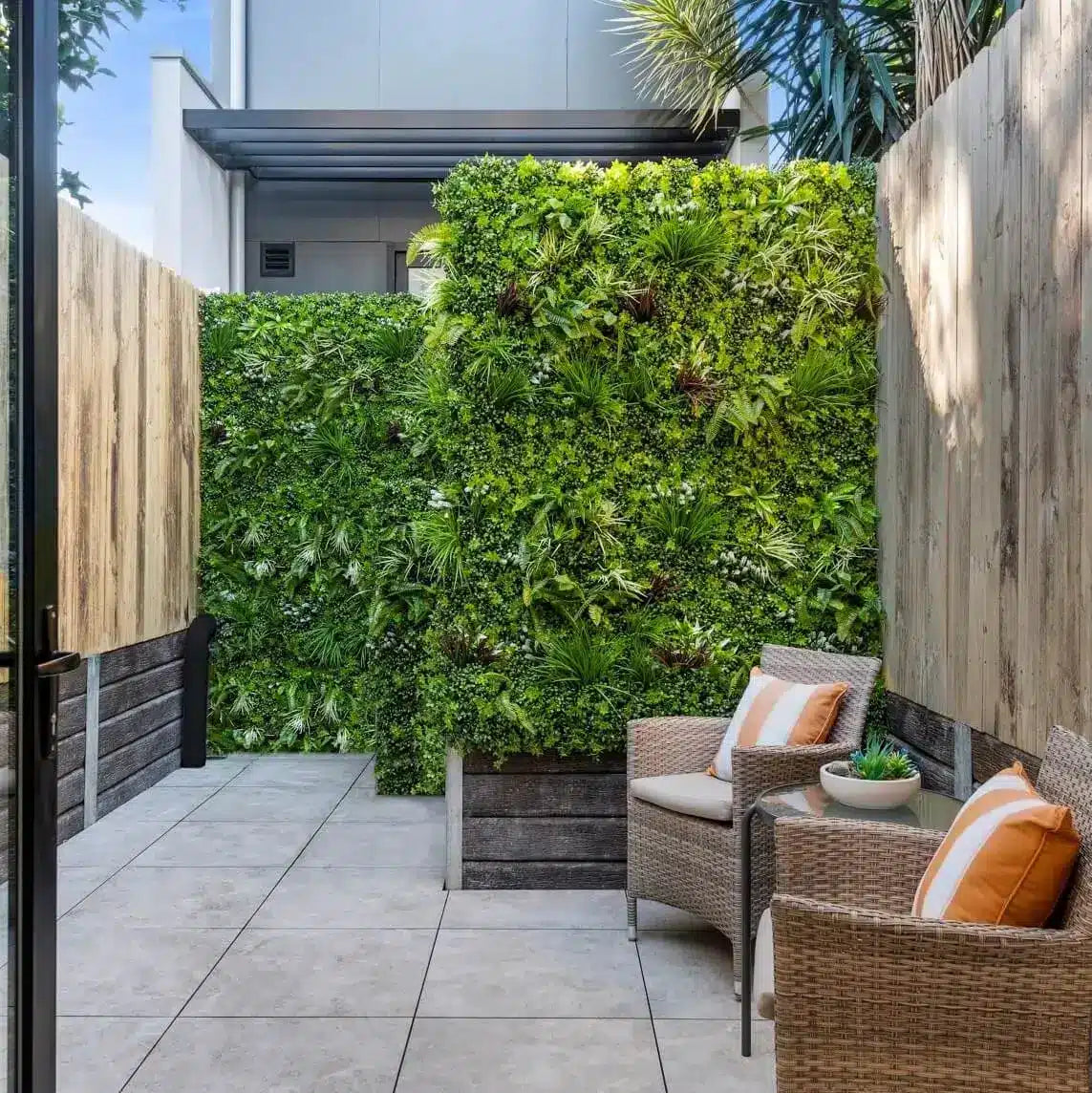
Gardening is a special kind of torture. Beautiful gardens are wonderful to have, but the constant battle against weather, pests, and plants that either die mysteriously or try to conquer entire yards? That's the ugly reality nobody talks about on those perfect Instagram feeds.
Take bamboo. Garden centres love selling it with promises that it will "stay contained" (possibly the biggest lie in landscaping history). Fast forward two years, and homeowners find themselves jackhammering concrete to remove roots that somehow tunneled under patios like vegetable commandos on a mission.
The harsh truth? Real bamboo is the serial killer of the plant world. It looks innocent until it's too late.
Why Fake Bamboo Doesn't Suck Anymore
Let's be clear—fake plants used to be AWFUL. The kind you could spot from across the street. The dusty monstrosities that have been sitting in dentist office corners since the 90s.
But something changed in the artificial plant world when nobody was looking. Manufacturers finally figured out some basic truths:
- Plants aren't uniformly green
- Leaves aren't perfectly symmetrical
- Nature has imperfections
Revolutionary concepts, apparently.
Today's artificial bamboo plants actually look...good? Some look downright amazing. The cheap garbage still floods the market, but quality options now include genuinely impressive details:
- Stems with variable thickness
- Actual texture you can feel
- Colour variations that catch light differently
- Nodes and segments that match real bamboo growth patterns
The good ones will fool anyone who doesn't actually touch them. And even then, they might still be confused.
Money Talk (Because That's What Really Matters)
How much does quality artificial bamboo cost? That's the question everyone wants answered without wading through paragraphs of fluff.
Good artificial bamboo isn't cheap. But neither is therapy after fighting real bamboo for a decade, so there's that trade-off to consider.
Here's the rough breakdown:
| What You Need | What It'll Cost | What You'll Get |
| Small potted bamboo (3-4ft) | $60-150 | Something for tabletops or small corners |
| Tall statement bamboo (6-8ft) | $150-400 | The "wow factor" pieces that anchor spaces |
| Bamboo privacy screen | $200-600 | The neighbour-blocker you've been dreaming of |
| Bamboo fence sections | $50-200 per panel | The clean look without the maintenance |
The super cheap stuff? Pure garbage that will look embarrassing within months. The insanely expensive stuff? Probably overkill unless the patio hosts photoshoots regularly.
The sweet spot is middle-upper range where you get good UV resistance (critical unless you enjoy replacing faded blue-ish plants every year) and realistic details.
The Stuff Nobody Tells You About
Here's what's frustrating when researching fake bamboo—nobody mentions the practical stuff. Time for some truth bombs:
Weight Matters More Than You Think
Cheap artificial bamboo is lightweight, which means:
- It blows over in a gentle breeze
- It looks fake because it moves wrong
- It doesn't have presence
Quality fake bamboo has proper weight distribution. It stays put during normal wind and moves only when it should. This is HUGE for realism.
The Planter Is Half the Battle
The fastest way to spot fake plants? The container. Those black plastic nursery pots scream "FAKE!" louder than the plant ever could.
Smart choices include:
- Heavy ceramic planters
- Stone containers
- Wood boxes (cedar or redwood)
- Concrete planters
Then they need proper filling—not just whatever was handy. Professionals use:
- Concrete for base stability (seriously)
- Landscaping foam to position stems
- Decorative rock or preserved moss as topping
This isn't just about looks—proper installation means the bamboo won't become a projectile during the first storm.
Placement That Doesn't Scream "Fake Plants Here!"
Random plant placement is the hallmark of artificial greenery. Nature doesn't work that way, and patios shouldn't either.
The "Natural Clustering" Trick
Real bamboo grows in clumps with specific patterns. Mimicking this means:
- Grouping stems closely at the base
- Allowing some to angle slightly outward
- Varying heights by 10-15% within groups
- Creating density at bottom that lessens toward top
The Sight Line Secret
Smart placement puts artificial bamboo where it makes logical sense:
- Areas where soil access would exist
- Spots that get appropriate sun for bamboo (if real)
- Locations protected from strongest winds
Avoiding tall bamboo in exposed areas where real bamboo would snap is critical—that's a dead giveaway.
The "Mixed Media" Approach That Actually Works
The most convincing patios use a hybrid approach:
- Artificial bamboo for structure and height
- Real low-maintenance plants at ground level
- Natural materials like stone and wood nearby
This creates what designers call "textural truth"—enough real elements that the brain accepts the artificial ones without question.
Surrounding artificial bamboo with these elements works wonders:
- Hardy succulents that thrive on neglect
- Decorative grasses that complement bamboo's movement
- Ground covers that add horizontal interest
The Maintenance Reality Check
"Maintenance-free" is marketing garbage. Lower maintenance? Absolutely. No maintenance? Nope.
Artificial bamboo needs:
Seasonal Attention
- Spring: Full rinse to remove winter grime
- Summer: Occasional leaf dusting
- Fall: Removal of real leaves that get caught
- Winter: Protection from heavy snow loads
UV Protection
The sun is relentlessly destroying everything outdoors. Fighting back means:
- Annual UV protectant spray
- Rotation of plants to distribute sun exposure
- Shade positioning during peak summer hours
Realistic Aging
This is advanced stuff, but the pros know it:
- Allowing some natural weathering rather than fighting it
- Replacing individual stems rather than whole plants
- Accepting that 3-5 years is a good lifespan for exposed pieces
Design Ideas That Don't Suck
The Privacy Screen That Doesn't Look Desperate
Nothing screams "I hate my neighbours" like a sudden 8-foot fence. Artificial bamboo creates privacy with style:
- Staggered heights create natural-looking barriers
- Placement at 15-30° angles rather than straight lines
- Layered different varieties for depth
- Small gaps that block views but not light
The Focal Point That Anchors Everything
Empty patio corners are depressing. A statement bamboo grouping creates:
- Visual height that draws the eye upward
- Year-round structure when other plants die back
- Night-time drama when uplit with landscape lighting
- Audio interest when breezes create natural movement
The Space Divider That Doesn't Require Construction
Open patios feel unfinished. Artificial bamboo creates "rooms" without walls:
- Defining dining areas from lounging spaces
- Creating transitions between hardscape and landscape
- Establishing traffic patterns without physical barriers
- Framing views worth seeing while blocking eyesores
Comparing Different Types (Because They're Not All the Same)
Potted Bamboo Plants
Best for: Small spaces, mobility, seasonal rearranging
Drawbacks: Less dramatic impact, needs proper containers
Bamboo Screens
Best for: Immediate privacy, hiding ugly views, wind protection
Drawbacks: Less realistic movement, limited configuration
Bamboo Trees/Large Specimens
Best for: Statement pieces, corner treatments, dramatic impact
Drawbacks: Higher cost, more challenging to position properly
Bamboo Fencing/Panels
Best for: Permanent solutions, structure mounting, continuous coverage
Drawbacks: Less dimensional, requires proper installation
The Environmental Question (Because Someone Always Asks)
Let's address the elephant: plastic plants aren't exactly eco-warriors. But consider:
- Quality artificial bamboo lasts 7-10 years
- Real bamboo consumes surprising amounts of water
- No fertilisers or pesticides needed
- No risk of introducing invasive species (a HUGE issue with certain bamboo varieties)
Replacing cheap artificial plants yearly? Environmental disaster. Investing in quality pieces with long lifespans? The math changes considerably.
How To Spot Quality (Because Marketing Lies)
The words "premium" and "realistic" appear on every product description from $20 garbage to $2,000 museum-quality reproductions. Ignore the marketing and look for:
Materials That Last
- UV-resistant polyethylene (not just PVC)
- Internal wire structures wrapped with natural materials
- Colour-fast dyes (not surface paints)
- Water-resistant components (not just waterproof claims)
Construction That Makes Sense
- Variable stem diameters
- Stems that connect to branches in botanically accurate ways
- Proper leaf attachment points
- Weight that matches real plants
Details That Sell The Illusion
- Colour variation within individual leaves
- Proper node structure and placement
- Natural asymmetry in growth patterns
- Appropriate leaf density (most fake plants have too many leaves)
The Bottom Line
Artificial bamboo plants transform patios from "unused outdoor space" to "places people actually enjoy." They provide structure, privacy, and style without the maintenance nightmare of real bamboo.
Are they perfect? Hell no. Nothing is. But they solve real problems for people who want to enjoy their outdoor spaces without becoming amateur botanists.
Choosing quality over quantity, placing with purpose, and maintaining them properly means nobody but the most dedicated plant snob will know—or care—that the gorgeous bamboo isn't busy plotting to destroy the foundation.
A patio should be somewhere to relax, not a source of endless work. Sometimes, fake is actually better.
At Designer Plants, find premium artificial bamboo plants designed specifically for Australian conditions — UV resistant, beautifully realistic, and made to last. Whether you're styling a small balcony or a spacious patio, Designer Plants has the perfect greenery to transform any outdoor space with ease.