
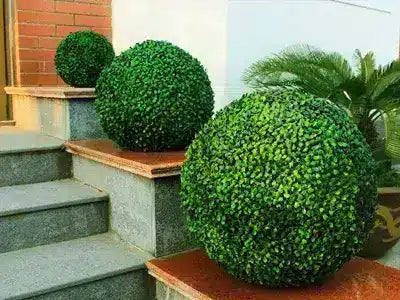
Ever walked past those perfectly manicured gardens with flawlessly shaped shrubs and thought, "Wow, who has time for that?" Real topiary maintenance is not for the faint of heart – or those without a professional gardener on speed dial. Between the constant trimming, watering, pest control, and the heartbreak when your masterpiece dies after one harsh winter, it's enough to make anyone toss their pruning shears in defeat.
The solution? Fake topiary trees. These remarkable duplicates deliver the elegance and structure of traditional topiaries without the maintenance nightmare. Ready to transform your outdoor space from mundane to magazine-worthy? Let's dive into the world of outdoor fake topiary trees and how they can revolutionise your yard.
Why Artificial Topiaries Are Taking Over Modern Landscaping
Traditional topiaries require years of patient growth and skilled pruning to achieve those perfect geometric shapes or animal forms. Artificial topiary plants deliver instant gratification and permanent perfection. Let's break down why they're becoming the smart choice for savvy homeowners:
|
Feature |
Real Topiary Trees |
Artificial Topiary Trees |
|
Initial Cost |
$$ |
$$$ |
|
Maintenance Cost |
High (ongoing) |
Minimal |
|
Time Investment |
Weekly pruning |
Occasional cleaning |
|
Shape Retention |
Requires constant attention |
Permanent |
|
Seasonal Appearance |
Varies, dormant in winter |
Consistent year-round |
|
Lifespan |
10-20 years with perfect care | 7-10 years outdoors with quality materials |
|
Pest Issues |
Vulnerable | None |
|
Watering Needs |
Regular |
None |
The math speaks for itself. While the upfront investment might be higher, topiary trees' outdoor artificial options pay for themselves within a year or two when you factor in maintenance costs and time saved.
Popular Artificial Topiary Styles That Transform Yards
Artificial topiary has come a long way from those obviously fake plastic plants of yesteryear. Today's options are sophisticated, varied, and startlingly realistic.
-
Classic Geometric Forms
The timeless ball, cone, and spiral shapes remain popular choices. These structured forms add architectural interest without competing with other design elements. Perfect for creating symmetry at entryways or as anchor points in garden beds.
-
Tiered and Layered Designs
Stacked ball topiaries or wedding cake-style designs add height and visual interest. These eye-catching options work beautifully as standalone focal points or in pairs flanking doorways and garden gates.
-
Animal and Whimsical Shapes
From traditional peacocks and deer to modern interpretations like abstract sculptures, these conversation pieces add personality and playfulness to otherwise formal spaces.
-
Boxwood Alternatives
Not all artificial topiary trees mimic boxwood. Rosemary, lavender, and cypress interpretations offer different textures and slightly less formal appearances for a more natural look.
Choosing the Right Artificial Topiary: Quality Matters

Just like real estate, when it comes to artificial topiary plants, it's all about quality, quality, quality. A cheap artificial topiary screams "fake" from across the yard, while premium versions have neighbours doing double-takes.
Material Considerations
Look for:
- UV-resistant materials that won't fade after one summer
- Weather-resistant construction that can handle rain and snow
- Dense foliage without obvious gaps
- Realistic colouration with subtle variations (avoid uniform, bright green)
- Sturdy internal structure that won't collapse in the first windstorm
Size and Scale Guidelines
The most common mistake? Undersized topiaries that look like sad afterthoughts rather than deliberate design elements. Follow these rough guidelines:
- Entryways: Minimum 3-4 feet tall for single-story homes; 4-6 feet for two-story
- Garden focal points: Should rise at least 12" above surrounding plantings
- Borders: Consistent sizes create formality; varied heights create dynamic interest
- Containers: Topiary height should be 1.5-2 times the height of the container
Strategic Placement for Maximum Impact
Randomly plopping topiary trees outdoor arrangements without thought results in a disjointed, unconvincing display. Strategic placement is everything.
-
Creating Focal Points
Use larger, more elaborate pieces to draw the eye to specific areas – perhaps disguising an unsightly utility box or highlighting an architectural feature. The rule of odd numbers works well here – groups of three or five create more natural-looking arrangements than pairs.
-
Framing Views and Entrances
Matching topiaries of equal size and shape positioned symmetrically create formality and elegance around doorways, gates, and garden entrances. This classic approach never goes out of style.
-
Defining Spaces
Use artificial topiary to create "walls" that separate different garden rooms or functions, like dining areas from play spaces. A row of identical forms creates a sense of intention and structure.
Installation Tips: Making Them Look Authentic
The difference between amateur and professional-looking artificial topiary installations often comes down to these crucial details:
Secure Basing
Nothing screams "fake" like a topiary that topples in the first breeze. Options include:
- Decorative planters weighted with concrete or sand
- Ground stakes for direct installation (works best with spiral or larger forms)
- Built-in bases concealed by decorative mulch or ground cover
Mixing With Live Plants
The secret to truly convincing artificial topiary trees? Surround them with real plants. The contrast makes it harder to discern what's real and what's not. Try planting seasonal flowers around the base of containers or integrating into mixed beds.
Lighting Considerations
Strategic lighting creates dramatic nighttime shadows that enhance the sculptural quality of topiaries. The interplay of light and shadow actually helps disguise the artificial nature of the plants after dark.
Maintaining Your Artificial Investment
While maintenance is minimal compared to live plants, some care will extend the life and appearance of outdoor fake topiary trees:
Seasonal Cleaning
- Spring: Gentle hose-down to remove pollen and winter debris
- Fall: Compressed air to blow out fallen leaves that nest in foliage
- As needed: Mild soap and water for stubborn dirt or bird droppings
Protecting Your Investment
- Consider moving smaller pieces to sheltered locations during extreme weather
- Apply UV protectant spray annually to prevent fading
- Rotate occasionally to ensure even sun exposure if positioned in partial shade/sun areas
Expert Styling Tips That Make a Difference
Professional landscape designers use these tricks to create truly convincing artificial topiary displays:
-
Vary Your Heights
Even with formal, symmetrical arrangements, slight variation in height adds authenticity. Real plants don't grow at exactly the same rate, so perfectly identical twins can look suspiciously artificial.
-
Consider Seasonal Context
In regions with dramatic seasonal changes, consider how your artificial elements will look against their surroundings. The perfectly green spiral might look out of place when everything else is dormant in winter. Position accordingly or consider seasonal swaps.
-
Embrace Imperfection
The occasional slight asymmetry or "wild" branch can actually enhance realism. Some premium artificial topiary plants deliberately incorporate these small imperfections.
The Final Touch: Bringing It All Together
Creating a stylish yard with artificial topiary trees isn't just about the plants themselves but how they integrate with your overall landscape design. Use them to complement, not dominate, your outdoor space. They should enhance your garden's natural flow and highlight its best features.
When done right, artificial topiaries offer the structure and elegance of formal gardens without the constant battle against nature's tendency toward chaos. They provide year-round green punctuation marks in your landscape story, defining spaces and leading the eye through your outdoor rooms.
For premium quality artificial topiaries that stand the test of time, check out Designer Plants. Their collection features UV-resistant, weather-proof options crafted with attention to realistic detail and durability. Designer Plants specialises in high-end artificial topiary trees that look authentic even under close inspection.
Remember, the best compliment your artificial topiary can receive isn't "what a beautiful fake plant" but rather having guests completely overlook the fact that it's artificial at all. When they assume your perfect spiral topiaries are just the result of your impressive gardening skills, you'll know you've nailed it.